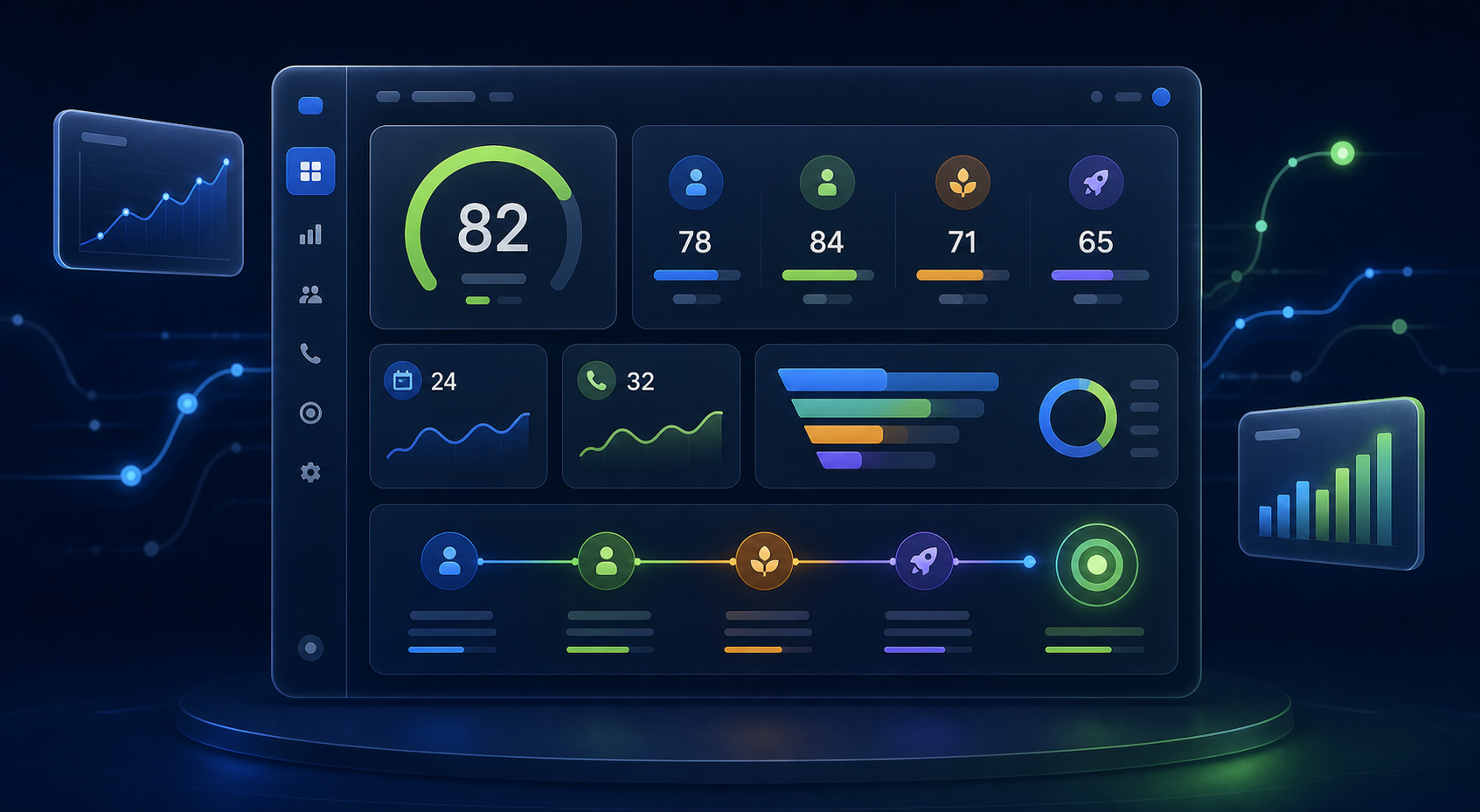
What Kbot-Insight is
Kbot-Insight is the sales performance appraisal layer inside Kbot. It collects signals from CRM records, email campaigns, LinkedIn outreach, Kbot Meet, calls, pipeline activity, and workforce activity, then translates those signals into a practical score for each salesperson.
The goal is not to punish people for low activity. The goal is to show whether activity is producing movement. A sales rep who sends many messages but creates no prospects should not receive the same appraisal as a rep who converts fewer but better conversations into customers.
The appraisal philosophy
Kbot-Insight is outcome-first. The highest score goes to sales work that becomes customers. Next comes qualified prospects, because those are the buyers most likely to become revenue. After that, Kbot-Insight looks at nurturing rate, incubation discipline, and outbound signals such as welcome emails, invitation requests, LinkedIn posts, calls, and meetings.
Customers matter most
The strongest signal is real customer conversion, because it proves the sales process is producing revenue outcomes.
Prospects come next
Qualified prospects show that outreach and discovery are attracting the right buyers, even before the deal closes.
Nurturing protects future revenue
Consistent follow-up, useful replies, and relationship building keep warm buyers from going cold.
Incubation shows patience
Longer-cycle leads need structured attention. Kbot-Insight rewards teams that keep them alive without over-contacting.
How the score is built
The model can be adjusted by management, but the default appraisal is a 100-point score that prioritizes revenue progress over raw activity volume. Every activity still matters, but the weight tells salespeople what success means: customers first, qualified prospects second, then nurturing, pipeline movement, meetings, calls, and supporting outbound signals.
| Signal | What it measures | Default weight |
|---|---|---|
| Customers | Closed-won customers, customer progression, and successful handoff from pipeline into active customer status. | 35 pts |
| Prospects | Qualified prospects created from outreach, meetings, calls, referrals, or inbound interest. | 20 pts |
| Nurturing rate | How many warm relationships continue to receive timely, useful follow-up instead of being abandoned. | 15 pts |
| Incubation | Longer-term leads kept alive through scheduled value touches, reminders, and reactivation sequences. | 8 pts |
| Welcome email | Whether a new contact receives the right introduction, context, and next-step message. | 4 pts |
| Invitation requests | LinkedIn or network invitations sent to the right target buyers, within safe daily limits. | 4 pts |
| LinkedIn posts and engagement | Relationship-building activity, profile engagement, post activity, and buyer-facing visibility. | 4 pts |
| Meetings and calls | Booked meetings, completed calls, call notes, Kbot Meet summaries, and follow-up completion. | 10 pts |
| Clock in / clock out | Daily sales attendance, work-session timing, shift coverage, and availability context recorded by Kbot. | Tracked only |
Default formula: Customers 35% + prospects 20% + nurturing rate 15% + meetings and calls 10% + incubation 8% + welcome emails 4% + invitation requests 4% + LinkedIn posts and engagement 4% = 100%. This keeps the score fair: a rep cannot win the appraisal with busywork alone, but Kbot still rewards the habits that create future customers.
Clock in / clock out is required, but not weighted by default. Kbot should still record when each salesperson starts and ends the workday, because managers need attendance, coverage, and accountability records. Those records provide context for the appraisal, but they do not raise the performance score unless management deliberately adds a time-discipline weight.
Open the Workforce sales timeline
What salespeople should do with it
Kbot-Insight is designed to be readable by salespeople, not only managers. A rep should be able to open the scorecard and immediately understand what to improve this week.
Start with customer movement
Review which prospects became customers, which deals stalled, and whether next steps were completed on time.
Review prospect creation
Check whether email, LinkedIn, calls, meetings, and inbound signals are creating qualified prospects.
Check nurturing and incubation
Make sure warm leads are receiving useful follow-up and long-cycle accounts are not forgotten.
Look at activity quality
Welcome emails, invitation requests, LinkedIn posts, calls, and meetings should all support pipeline movement, not just fill a dashboard.
Use the score as a coaching guide
Managers can identify coaching needs by seeing exactly where a rep is strong or weak across the revenue path.
How managers can use Kbot-Insight
For managers, Kbot-Insight becomes a performance conversation starter. Instead of asking why a salesperson was busy, managers can ask what the activity produced. Did new prospects appear? Did nurturing improve? Were calls logged? Did meetings create follow-ups? Did customers move forward?
This makes weekly reviews more objective. A manager can compare reps across the same revenue path while still looking at the details behind each score.
Where Kbot-Insight fits inside Kbot
Kbot-Insight is not a separate product sitting outside the workflow. It belongs inside the Kbot Revenue Workspace. It reads the CRM, outreach, meetings, calls, workforce signals, and pipeline process so the appraisal is tied to actual work.
That connection is what makes the score useful. If a rep sends a welcome email, books a Kbot Meet session, logs a call, advances a prospect, or turns a prospect into a customer, Kbot-Insight can reflect that movement in the appraisal model.
The bottom line
Kbot-Insight helps sales teams move from activity reporting to outcome appraisal. It gives salespeople a fairer way to understand performance, gives managers a clearer coaching tool, and gives the business a stronger connection between sales activity and revenue progress.
When used consistently, the score becomes a simple weekly rhythm: create customers first, create qualified prospects next, keep nurturing healthy, protect incubation, and make every email, invitation, post, call, and meeting support the pipeline.